
for organisations and teams
Corporate Retreat
You and your team have worked so hard — give yourselves a space to relax and slow down together.
A retreat and well-being experience designed for each organisation and team, giving members time to recover and restore their energy, while building internal bonds through deep understanding.
the context today
The pace of change is running faster than people.
In an environment where everything keeps moving, we must keep learning new things, adapting to technology, meeting expectations and finding ways to do more in the same amount of time.
In that rush, what gets left behind is sometimes not productivity, but what makes up the quality of a collective: the ability to listen, empathy, a sense of belonging and the energy to be truly present with each other.
A team can work together every day and still not have enough space to understand one another. A leader can keep making decisions for the whole group yet rarely have time to listen to themselves. And an organisation can invest heavily in performance yet not give enough care to the people who create that performance.
Sometimes what a team needs is not one more training session or a new goal. They need an intentional pause — to look at what is happening, to recover and to find a healthier way of working together again.
Four things businesses shouldn’t overlook
-
Growing pressure to adapt
When work keeps changing, people spend a lot of energy learning, adjusting and meeting expectations. Without suitable breaks, tiredness can build up and affect how each person works, communicates and makes decisions.
-
Busy doesn’t mean connected
Members may meet together and discuss work every day yet still not truly understand what is going on inside each other. Connection needs more than everyday interaction: it needs time, presence and a chance for each person to be heard.
-
Mental wellbeing is part of leadership responsibility, too
A healthy workplace is not built only from processes or policies. It also comes from how people treat each other, the ability to speak up when things are hard, and how safe each person feels being themselves within the group.
-
The abilities that make a difference still begin with people
Technology can help us work faster, but the ability to understand, to listen, to recognise emotions and to build trust still has to be nurtured in interactions between people. These are also important abilities for a team to move through change together.
- arrivefully present
- connectcloser together
- restorefinding energy again
what it is
What is a Corporate Retreat?
Not just a group activity, but a chance for people to meet in a different role: the role of a human being.
the gracespace’s Corporate Retreat is an experience of caring for mental wellbeing and nurturing bonds within a team, designed around the circumstances, needs and what the business is really facing.
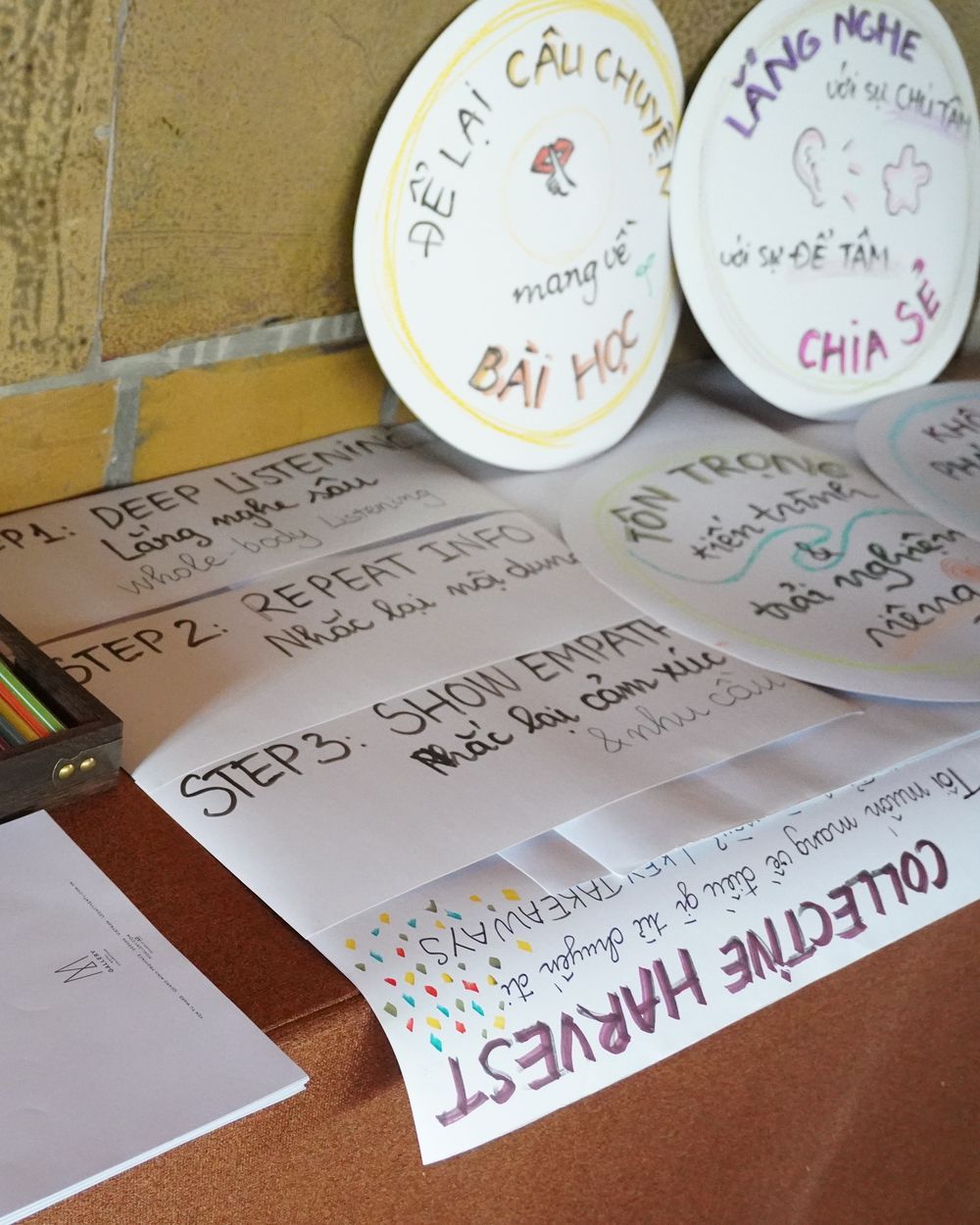
Through circle practice, mindfulness, somatic practice and deep listening, the programme makes it possible for each person to step briefly out of the everyday rhythm of work. Instead of talking only about tasks, goals or performance, people get the chance to listen to themselves, share things that are often hard to say in an office setting, and understand more about the people working beside them.
Every programme is designed individually. We begin with a conversation to understand your business context, your team’s concerns and what you hope to create. From there, the content, length, practice methods and way of facilitating are adjusted to fit each group.
what this is not…
A motivational talk, a series of team building games, a workshop of slide decks or a holiday day for relaxing only.
This is a space prepared and led with intention, where people can slow down, listen and open the way for honest conversations to happen.
who it is for
Who is the programme for?
For organisations that understand that caring for people is also caring for the foundation of the organisation.
Corporate Retreat suits businesses that want to look beyond a short-term bonding activity and are ready to make it possible for their team to understand each other better, restore energy and build a more sustainable way of working together.
-
A team going through a period of change
Restructuring, fast growth, a change of direction or a recent stretch of heavy pressure can leave members carrying different feelings and concerns. A shared pause gives people the chance to look back at what has happened, share perspectives and find common ground again before moving on.
-
A leadership team under a lot of pressure
People in leadership roles often have to make decisions, solve problems and support others, while they themselves also need a place to pause and acknowledge the pressure they are carrying. A retreat designed for a leadership group can open space for self-reflection, honest dialogue and clarity on what truly matters in the next stage.
-
Businesses that want to nurture culture from within
Culture is not only in the values written on a wall or in periodic internal activities. Culture is also formed by how people listen to each other, resolve disagreements, speak when things are difficult and treat each other in everyday situations.
A retreat is a chance for a team to experience other ways of interacting together, and from there reflect on the culture they want to build.
-
Groups that need to improve how they communicate
There are things left unsaid. There are disagreements unresolved, or problems that keep repeating because people have not had the chance to truly listen to each other. Through structured dialogue practices, a team can begin to name what is happening and find ways to talk with each other respectfully, instead of focusing only on who is right and who is wrong.
-
Businesses that care about mental wellbeing
If mental wellbeing has already become part of a business’s people development direction, a retreat can be a way to turn that care into a concrete experience. Rather than stopping at a message about wellbeing, the programme gives employees a chance to practise ways of caring for themselves and connecting that they can keep exploring and apply in everyday life.
-
Small and medium-sized teams
Each circle practice session is designed for about 10–15 people, so every member has enough time to take part and be heard. For larger teams, we can discuss options for splitting into several groups, depending on the size and goals of the programme.
approach
Four practices, one unified experience
There is no single formula for every team. But there are practices that help us meet more sincerely.
Corporate Retreat combines four methods: circle practice, mindfulness, somatic practice and deep listening. Each plays a different role, but all point to one shared experience: helping people be more fully present, and understand themselves and each other better.
-
01 · foundation
Circle practice
Circle practice
A space for honest conversations
At work, we usually talk to each other through roles: manager, employee, decision-maker or person responsible. Those roles are necessary, but sometimes they also make us hesitate to share what we truly think and feel.
Circle practice creates a different structure for dialogue. Everyone gets a turn to share from their own experience, while the others practise listening without rushing to counter, judge or offer solutions.
With an object marking whose turn it is (a Talking Piece), each person has time to speak, and issues are placed at the centre of the conversation rather than directing criticism at one individual. This practice helps make room for equal dialogue and understanding, while still respecting each person’s limits on what they share.
can be applied in
- Circles for sharing and reflecting on experiences.
- Dialogue sessions for teams.
- Dialogue among members of the leadership team.
- Conversations that need guiding when a team has differences or tension.
-
02 · presence
Mindfulness
Mindfulness practice
Returning to the moment that is here
In the daily rhythm of work, the mind is easily pulled towards the next meeting, what just happened or what is still unresolved. Even after leaving the desk, we sometimes keep carrying work in our heads.
Mindfulness practice opens a chance for each person to pause, notice the breath, the body and what is happening inside, instead of constantly chasing what needs to be done.
In a retreat, mindfulness is not just a stand-alone relaxation activity. It is also the foundation that helps people slow down enough to listen, notice their own reactions and stay with what doesn’t have an immediate answer.
can be applied in
- Grounding and bringing attention to the present.
- Guided meditation.
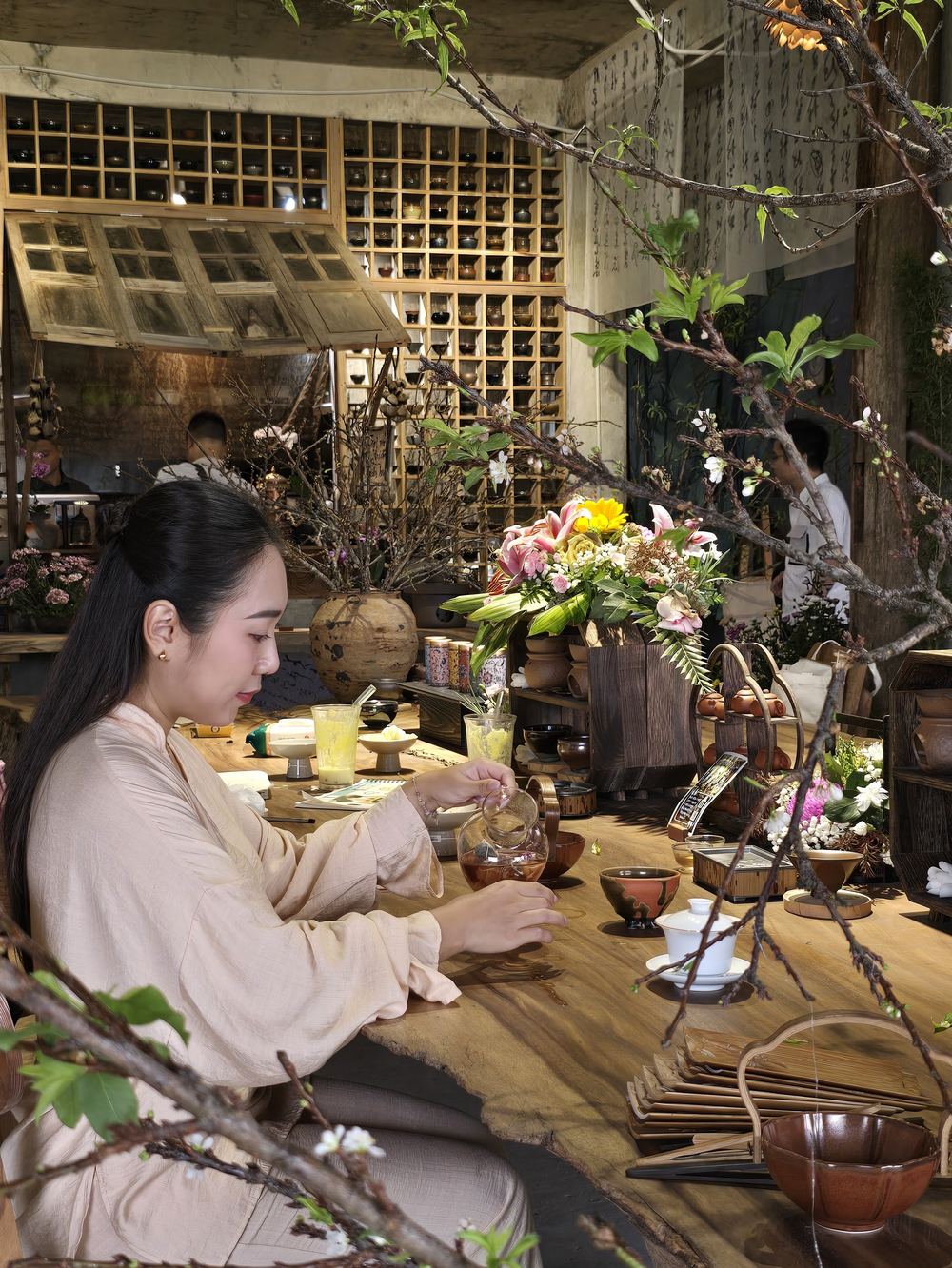
- Mindful tea drinking.
- Mindful walking.
- Practising awareness of the breath and bodily sensations.
-
03 · body
Somatic practice
Somatic practice
Listening to what the body is carrying
Workplaces usually give most attention to thinking, language and what can be measured. Meanwhile, the body also reflects how we are living and working: through tension, tiredness, breathing rhythm or difficulty sitting still.
Somatic practice helps each person shift attention from only thinking about experience to directly sensing their own sensations. Through gentle movement and body-sensing exercises, participants have more chance to notice signals that are often overlooked in a busy life.
No prior experience needed. Activities are chosen and adapted to the programme’s context, with respect for each person’s limits and level of comfort.
can be applied in
- Practising awareness of bodily sensations.
- Gentle movement.
- Expression through art.
- Exploring movement and rhythm.
- Body scan exercises.
-
04 · connection
Deep listening
Deep listening
Listening to understand, not only to reply
In many conversations at work, we listen in order to respond, defend a point of view or quickly find a solution. That can be useful when handling tasks, but it does not necessarily help the other person feel truly understood.
Deep listening is a skill that needs practice. It is the ability to give your attention to what another person is sharing, to set aside your own assumptions and judgements for a while, and not to rush to fix things or give advice.
With more chances to practise this way of listening, members can better understand different perspectives, notice what has not been fully said and find ways to talk with each other more openly. It is also an important foundation for difficulties to be shared early, before they become more complicated.
can be applied in
- Practising listening in pairs.
- Listening without interrupting or giving advice.
- Reflective dialogue.
- Sharing and listening in silence.
- Dialogue built on what is going well and the resources already available.
the inner journey
From within to how we work together
Change in a collective can begin with something very personal: how each person is present with themselves.
Corporate Retreat does not aim to change everything in one day. Instead, the programme creates an experience for each person to look back at themselves, widen their understanding of others and carry those insights back into how they work together.
Four layers of experience, connected to each other
-
Understanding yourself
know yourself
Recognising feelings, needs and what matters to you, beneath the roles and responsibilities at work.
-
Understanding others
understand others
When we understand our own experience better, we have more chance to see others from their point of view, rather than only through ready-made assumptions.
-
Genuine connection
connect authentically
When people have the chance to share and listen to each other in a space guided appropriately, trust and a sense of belonging can slowly be nurtured.
-
Leading differently
lead differently
What each person realises about themselves and others can open new approaches to communication, collaboration and leadership — not through a ready-made template, but from a deeper understanding of people and real circumstances.
What can continue after the retreat?
A short experience cannot replace changes that need to be nurtured over a long time. However, a retreat can be the starting point for new conversations and new practices in the team.
-
Leading with more trust
When they understand their own reactions and worries better, leaders have more chance to notice when they are over-controlling, when to delegate, and how to make it possible for others to take more initiative.
-
Taking initiative rather than waiting to be assigned
When members feel their opinions are heard and they have a place in the group, they have more grounds to contribute, ask questions and take responsibility within their scope.
-
More open and respectful communication
Hard-to-say issues can be named earlier. Members have more ways to share feedback, work through disagreements and start difficult conversations without necessarily turning them into confrontation.
-
More energy and the ability to care for yourself
Participants get to try ways of pausing, noticing the body and adjusting their attention. Some practices can continue to be used in daily life, depending on each person’s needs and what fits.
-
Nurturing a sense of belonging
When they have the chance to know each other beyond tasks and titles, members can see more in the colleague beside them. This is one of the foundations for nurturing lasting trust and a sense of belonging.
-
Bringing wellbeing into team life
Rather than treating mental wellbeing care as a single, separate event, a business can keep choosing suitable practices to bring into meetings, reflection sessions or regular internal activities.
formats
Ways to organise it
Every team has different needs. The right format should begin from what the team needs.
Depending on the size, schedule and goals of the business, a retreat can take place over two hours, half a day, one day, or two days with an overnight stay. The formats below are a starting point for our conversation, not fixed packages that apply to every organisation.
-
2 hours
Introduction session
Introductory experience session
A focused practice session that helps the team get to know mindfulness and circle practice. This format can also be designed around a specific need, such as a period of transition, tensions in communication, or a wish to reconnect after a stretch of heavy pressure.
Suitable to hold at the office.
-
half a day
Half-day retreat
Half-day retreat
An experience combining grounding practice, circle dialogue and somatic practice. This amount of time is enough for the team to step briefly out of the daily operating rhythm, have a shared experience and spend time looking back, without being away all day.
Can be held at the office or an outside venue.
-
1 day
One-day retreat
One-day retreat
A day devoted to going deeper into the practices, from mindfulness and circle dialogue to listening and sensing the body. The programme has more time for transitions between activities, reflection and looking back together at what has happened.
Can be held at the office or an outside venue.
-
2 days
Two-day offsite retreat
Two-day retreat with an overnight stay
A longer experience, held outside the familiar work environment. Alongside structured practice sessions, the programme leaves room for rest, natural conversations and time to reflect at the end of the day.
This format suits when a business wants to make it possible for its team to step away from work rhythm for a long enough period, rather than only giving a few hours to a single activity.
Outside venue · To be discussed so we can design what fits.
how we work
From the first conversation to after the retreat
We don’t bring a ready-made programme and try to apply it to every team. We listen first, and only then design with you.
Every retreat begins with getting to know the people, the circumstances and what the business wants to create. The process below is the usual framework; the timing and specific steps can be adjusted to the size and schedule of the organisation.
The programme can take place at the office, at a venue chosen by the business, or at an outside space suggested based on location and team size. Each circle practice session is designed for about 10–15 people.
-
The first conversation
initial consultation
A conversation of about 45 minutes to understand the team’s current context, the difficulties it is facing and what you hope the retreat can create.
It is also a chance for both sides to consider whether the programme is a good fit before going further.
Free · No commitment.
-
Understanding your needs
needs assessment
Depending on the programme, we may suggest a short questionnaire or an additional conversation with the people involved. The purpose is to understand better the characteristics of the team, how people communicate, issues to be aware of, and the limits that need to be respected when designing the experience.
-
Designing your own programme
bespoke design
Based on what we have discussed, we build a programme that fits the goals, length and context of the business. The content covers the format, the practice methods, the sequence of activities and how it will be guided.
You will have the chance to review, give feedback and adjust it with us before the final programme is agreed.
-
The retreat experience
the retreat
We lead the activities ourselves, follow the group’s pace and adjust as needed. The aim is to make it possible for participants to feel respected, to choose how much they share, and to take part in a way that suits them.
-
Looking back and following through
post-retreat integration
About 2–4 weeks after the retreat, we hold a follow-up conversation with the leadership team or the people in charge of the programme. It is a chance to look together at what has been noticed, the changes underway and how to bring suitable practices into team life.
Because an experience only has lasting meaning when what has been realised has a chance to keep being present in daily work.
your facilitators
The people who accompany your team
Every retreat is led by Grace and Thuỷ.
-

Grace Phan
Holistic Transformation Designer · Mindful Storyteller
about GraceGrace has more than 14 years working in businesses, from small teams to organisations with tens of thousands of employees. As a result, Grace understands deeply the issues of people and work, relationships in the workplace, and above all the pressure of competing with AI and technology that many people carry every day.
From a period when she had to stop and look deep inside, Grace came to mindfulness practice and began designing transformation journeys for women and for organisations. With business teams, Grace brings her communications and marketing background to look together at how they communicate and connect, then designs an experience that fits the context of each collective.
-

Thuỷ Nguyễn
Psychologist · Relationship Coach · Circle Facilitator
about ThuỷThuỷ holds a Master’s in Psychology from the University of Essex, UK. She trained in creative arts therapy and dance-movement therapy with specialists from the US, UK and Australia, as well as forum theatre through the LifeArt programme.
With more than 6 years designing and leading circle practice programmes for teachers, healthcare staff, social workers and working professionals in business, Thuỷ has rich experience organising retreats, workshops and community programmes. She has worked with organisations and projects such as Lean In Vietnam, Tròn Lành Việt Nam and Mental Health Aids for All. The combination of a solid academic foundation, experience practising with the body and a warmth in how she connects with people gives her work its own character.
Through breaks in nature, creative activities and circle practice, Thuỷ makes it possible for each person to nurture their mental wellbeing sustainably.
an invitation to connect
Sometimes what a team needs is not to try a little harder, but to have a chance to pause and see each other more clearly.
If you are looking for a wellbeing experience for your business — not only for people to take a break from work, but also to understand themselves and each other and find healthier ways of working together — we can begin with a conversation.
Tell us a little about your team, what people are going through and what you hope to create from this time. From there, we will find the right format together.
the gracespace · Corporate Retreat & Well-being
Creating space for people to arrive, connect, and restore.